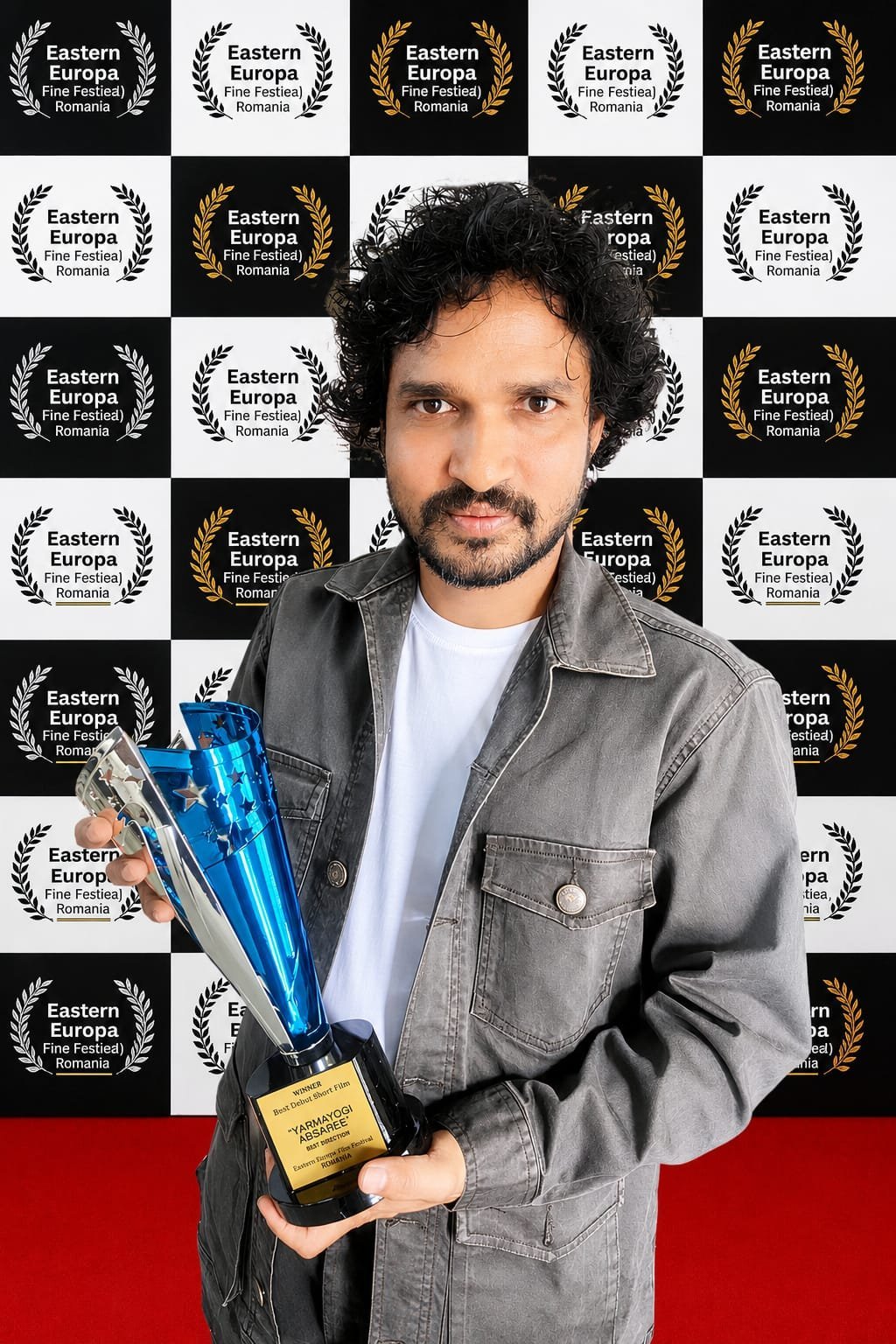

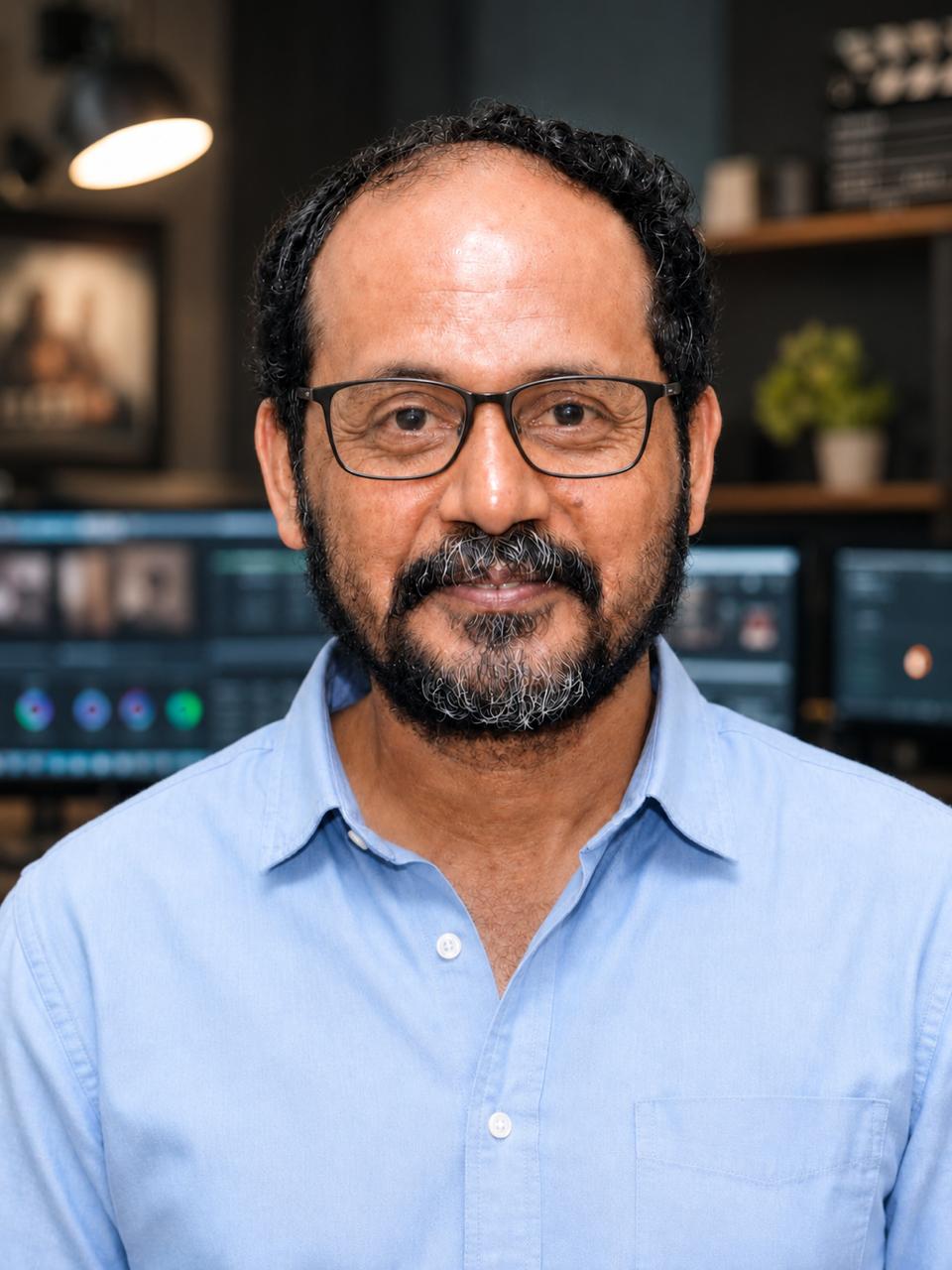
DIPAK MANDAL
The Invisible Architect of the Moving Image
Indian Film Editor • Post-Production Professional • Mentor
“Cinema is shaped twice—first through the camera, and then through the editor’s sense of time, emotion and rhythm.”
Introduction
Behind every powerful cinematic moment lies a sequence of creative decisions—when to hold a shot, when to cut, when to allow silence to speak, and when to let emotion take over.
While actors, directors and cinematographers often remain visible to audiences, the film editor usually works away from the spotlight. Yet it is inside the editing room that performances are shaped, stories are refined and the final rhythm of a film is created.
Dipak Mandal is an Indian film editor, post-production professional and mentor whose career reflects decades of sustained contribution to Indian cinema.
Based in Kolkata, West Bengal, Mandal has worked across an exceptionally broad range of productions, including:
Feature Films • Documentaries • Television • Advertising Films • Government Productions • Institutional Films • Regional Cinema • Film Education
Over the course of his professional journey, he has collaborated with filmmakers such as Bappaditya Bandopadhyay, Satarupa Sanyal, Hiren Bora, Somnath Sen and Paromita Munshi, along with numerous independent and regional filmmakers across India.
According to his professional résumé, his body of work includes more than:
150+ Feature Films
and
140+ Documentary Films
making him a highly experienced figure within India’s film-editing and post-production landscape.
Early Life and Academic Journey
Dipak Mandal was born on 5 February 1972 in West Bengal, India.
His early life is associated with the region around Raiganj in Uttar Dinajpur district, West Bengal.
His academic journey initially began outside the world of cinema.
He completed a:
B.Sc. (Honours)
North Bengal University
before moving toward his deeper interest in filmmaking and visual storytelling.
He later pursued:
M.A. in Film Studies
Jadavpur University, Kolkata
and completed his Film Studies education in 1998.
This combination of scientific education and film studies created a distinctive foundation for his career.
Film editing requires both creative sensitivity and analytical discipline. An editor must understand performance, rhythm and emotion, while simultaneously maintaining structure, continuity and technical precision.
Mandal’s academic background brought these two dimensions together naturally.
Professional Training in Film Editing
Alongside his academic education, Mandal strengthened his practical knowledge through specialised film-editing training.
He participated in a:
Digital Film Editing Workshop
at:
Chitrabani, Kolkata
conducted by:
Michael Kuetemeyer
Temple University, USA
This specialist training helped deepen his understanding of digital post-production and modern editing techniques.
His professional foundation was therefore built through a combination of:
Academic Film Studies • Digital Editing Training • Practical Industry Experience
Beginning of a Professional Editing Career
Dipak Mandal entered the film industry through the traditional route of practical apprenticeship.
After completing his studies, he began his career as an:
Assistant Editor
and gained professional exposure while working in association with established filmmakers, including Goutam Ghose.
The assistant-editing stage provided him with direct experience in:
Footage Management • Continuity • Scene Construction • Performance Selection • Sound-Picture Relationships • Technical Workflows • Narrative Organisation
These early years helped him understand how raw footage is gradually transformed into a finished cinematic experience.
With increasing experience, he progressed into independent film editing and began handling complete feature-film projects.
Association with Bappaditya Bandopadhyay
One of the most important creative associations in Dipak Mandal’s career was his long collaboration with filmmaker Bappaditya Bandopadhyay.
Their professional association extended approximately from:
2002 to 2015
and included several prominent projects.
Among the films connected with their collaboration are:
Houseful
Kagojer Bou
Elar Char Adhyay
Nayika Sangbad
Sohra Bridge
Long-term relationships between directors and editors are built on trust.
An editor must understand not only the screenplay but also the director’s cinematic language—when a scene should breathe, when dialogue can be removed, when a reaction is more powerful than a spoken line, and when a scene should end.
The longevity of Mandal’s collaboration with filmmakers reflects the confidence placed in his editorial judgement.
Houseful and Growing Recognition
A significant milestone in Mandal’s feature-film journey came with:
Houseful — 2009
directed by Bappaditya Bandopadhyay.
The film became one of the notable projects associated with his editing career and contributed to his growing recognition within regional and independent Indian cinema.
For a film editor, professional recognition is especially meaningful because editing often works best when it remains almost invisible to the viewer.
The audience may not notice the cut—but they experience its emotional effect.
A Wide-Ranging Feature Film Career
Over the years, Dipak Mandal developed an extensive and diverse filmography.
Representative titles from his career include:
Houseful — 2009
Kagojer Bou — 2011
Bhalo Meye Mondo Meye — 2011
Aath Pake Bandha — 2011
Elar Char Adhyay — 2012
Antore Bahire — 2012
Kanchenjunga Express — 2012
Nayika Sangbad — 2013
Kaal Madhumas — 2013
Atmogopon — 2013
Once Upon A Time In Kolkata — 2014
Khobh (Anguish) — 2014
Sohra Bridge — 2015
Onyo Opalaa — 2015
Chitra — 2015
Pather Sandhan — 2016
along with numerous other productions.
His career has never remained restricted to one director, one genre or one linguistic region.
Instead, it has been defined by adaptability, consistency and professional versatility.
2016 se 2026 tak ke liye biography me ye updated chronological section add kar sakte hain. Maine sirf uploaded résumé/PDF me supported information use ki hai.
Professional Journey: 2016–2026
2016 — Indian Panorama Recognition
The year 2016 marked an important phase in Dipak Mandal’s career as two films edited by him—Sohra Bridge, directed by Bappaditya Bandyopadhyay, and Onnyo Opalaa, directed by Satarupa Sanyal—were selected for the Indian Panorama section of the International Film Festival of India (IFFI) 2016. This recognition further strengthened his association with serious and festival-oriented Indian cinema.
2017 — Bengali and Assamese Cinema
In 2017, Mandal continued expanding his work across different regional film industries.
He edited:
Banhi
Director: Hiren Bora
Language: Assamese
and
Darkness of River
Director: Satarupa Sanyal
Language: Bengali.
These projects reflected his continuing ability to move between Bengali and Assamese cinematic traditions.
2018 — Seema – The Border
In 2018, Dipak Mandal edited:
Seema – The Border
directed by Hiren Bora in the Assamese language.
The project formed part of his continuing professional association with Assamese cinema and filmmaker Hiren Bora.
2019 — Expansion into Santali Cinema
The year 2019 demonstrated Mandal’s growing multilingual range.
His editing credits included:
Tin Kaya (Women with Keys)
Director: Sabyasachi Bhowmik
Language: Bengali
Phoolmoni
Director: Dashrath Hansda
Language: Santali.
His work on Phoolmoni was particularly representative of his involvement with regional and indigenous-language filmmaking.
2020 — A Significant Year in Editing
In 2020, Mandal edited three notable films across Bengali and Rava cinema:
Dom The Cremator
Director: Tapas Chakraborty
Language: Bengali
Nasimoy
Director: Hiren Bora
Language: Rava
Parh – The River Bank
Director: Raj Banerjee
Language: Bengali.
These films later became particularly important in his professional profile because his résumé records Best Editor recognitions associated with Dom The Cremator, Nasimoy and Parh – The River Bank at various film festivals.
2021 — Rajbongshi and Hindi-Santali Productions
Mandal’s multilingual career continued in 2021 with two distinct projects.
Bihaan – Tune of Faith
Director: Saurabh Saha
Language: Rajbongshi
Galwan Veer
Director: Surindar Tudu
Language: Hindi/Santali.
Galwan Veer is also included among the films for which Mandal’s professional material records a Best Editor recognition at a film festival.
2022 — Continuing Professional Activity
The uploaded résumé does not list a specific feature film under the year 2022 in its selected filmography.
However, Mandal’s overall professional record during this broader period continued to include feature films, documentaries, post-production work and film-related assignments.
His résumé states that his total career includes more than 150 feature films and more than 140 documentary films.
2023 — Work in Kurmali and Rava Cinema
In 2023, Mandal continued his involvement with less commercially represented regional languages.
He edited:
Tusu
Director: Biswajit Roy
Language: Kurmali
and
Missing Boy
Director: Maloy Roy
Language: Rava.
These projects further demonstrate the remarkable linguistic diversity of his editing portfolio.
2024 — Burkha – The Veil
In 2024, Dipak Mandal again collaborated with filmmaker Hiren Bora on:
Burkha – The Veil
an Assamese-language film.
The project continued a professional association that had already produced several Assamese and regional-language films.
2025 — Continuing Career
The selected filmography in the supplied résumé does not identify a specific title for 2025.
Therefore, it would be better not to invent or add a film for this year unless an additional updated filmography or certificate is available.
By this period, however, Mandal’s résumé describes an overall career of 150+ feature films, alongside extensive documentary, television and post-production work.
2026 — A New Phase of Multilingual Projects
The year 2026 is especially notable in the updated filmography, with several projects listed across different languages.
Beyond the Cancer
Director: Ashoke Viswanathan
Languages: Bengali / English / French
This project demonstrates Mandal’s continued engagement with multilingual filmmaking extending beyond Indian-language combinations.
Drops of Blood
Director: Maloy Roy
Language: Assamese.
Sleepless
Director: Samrat Bora
Language: Assamese.
Durga
Director: Raj Banerjee
Language: Bengali.
Pring Gital
Director: Hiren Bora
Language: Garo.
Together, these 2026 projects show that Dipak Mandal’s career remains active across Bengali, Assamese, Garo and international multilingual productions.
2016–2026: A Decade of Regional and Multilingual Cinema
The period from 2016 to 2026 represents an important decade in Dipak Mandal’s professional journey.
During these years, his work extended across:
Bengali • Assamese • Santali • Hindi • Rajbongshi • Rava • Kurmali • Garo • English • French
His credits moved from Indian Panorama-associated films to independent regional productions and multilingual projects, while his résumé continued to document a broader career exceeding 150 feature films and 140 documentary films.
The decade also illustrates one of the defining characteristics of his professional identity: the ability to edit stories across languages and cultures while maintaining the emotional rhythm and narrative discipline required by cinema.
Festival Cinema and Indian Panorama
Several films edited by Dipak Mandal have travelled to national and international film-festival platforms.
Among the notable titles associated with such festival circulation are:
Elar Char Adhyay
Sohra Bridge
Onyo Opalaa
His professional material also associates Elar Char Adhyay with an IFFI competition context in 2012 and international screenings.
Festival cinema often demands a different editorial sensitivity from mainstream commercial filmmaking.
The pacing may be more reflective, silences may carry greater importance and narrative structures may be less conventional.
Mandal’s involvement in such projects demonstrates his ability to work across varied cinematic forms.
A Multilingual Editing Career
One of the defining strengths of Dipak Mandal’s professional journey is his work across several Indian languages and cultural traditions.
His editing portfolio includes productions in:
Bengali • Assamese • Hindi • Santali • Rajbongshi • Rava • English • Other Regional Languages
Editing across languages requires sensitivity that goes beyond spoken words.
An editor must be able to understand:
Expression • Gesture • Breath • Silence • Rhythm • Emotion
These elements form a universal cinematic language.
Mandal’s multilingual career reflects his ability to read and shape emotion across diverse cultural contexts.
Work in Assamese Cinema
Dipak Mandal’s collaboration with filmmaker Hiren Bora represents another important dimension of his career.
Among the prominent projects connected with this association is:
Khobh (Anguish)
The film is described in his professional material as having been connected with international festival platforms in:
Tehran • Beijing • Cairo
His Assamese-related credits also include works such as:
Seema – The Border
Banhi
These projects demonstrate that his professional identity has always extended beyond Bengali cinema into the broader landscape of Indian regional filmmaking.
Regional and Indigenous-Language Cinema
Dipak Mandal has also contributed to films produced in less commercially dominant Indian languages.
Selected examples include:
Santali Cinema
Phoolmoni
Dulkaw Ek Prem Katha
Sima Bonga
Rajbongshi Cinema
Bihaan – Tune of Faith
Rava-Language Cinema
Nasimoy
Hindi / Santali
Galwan Veer
These productions reflect an important aspect of his filmography—the willingness to work with culturally specific stories and regional voices that form an essential part of India’s cinematic diversity.
Awards and Professional Recognition
Dipak Mandal has received a number of recognitions for his contribution as a film editor.
Partha Pratim Chowdhury Award for Best Editor
Nayika Sanbad
He received the Partha Pratim Chowdhury Award for Best Editor for his editing contribution to Nayika Sanbad.
Best Editor — Indo French International Film Festival, 2023
Dom The Cremator
His work on Dom The Cremator earned him the Best Editor Award at the Indo French International Film Festival in 2023.
Best Editor — Mokkom International Film Festival, 2023
Dom The Cremator
The same production brought him another Best Editor recognition at the Mokkom International Film Festival, 2023.
Best Editor — Roshini International Film Festival, 2023
Nasimoy
His editing of Nasimoy was recognised with the Best Editor Award at the Roshini International Film Festival in 2023.
Best Editor — Kolkata International Cult Film Festival, 2020
Parh – The River Bank
His work on Parh – The River Bank earned him the Best Editor Award at the Kolkata International Cult Film Festival in 2020.
Best Editor — Makizhmithran International Film Festival, 2023
Parh – The River Bank
The film later earned him another Best Editor recognition at the Makizhmithran International Film Festival in 2023.
Best Editor — Chandannagar International Film Festival
Ashariri..O
His editing contribution to Ashariri..O brought him another Best Editor honour.
Best Editor — Jharkhand International Film Festival
Galwan Veer
Mandal was also recognised as Best Editor for Galwan Veer at the Jharkhand International Film Festival.
150+ Feature Films
According to his professional résumé, Dipak Mandal’s body of work now extends to more than:
150 Feature Films
This large portfolio represents decades of continuous professional activity.
It reflects:
Longevity • Creative Consistency • Technical Adaptability • Multilingual Experience • Professional Trust
His career has been built not around a single project, but around sustained contribution to filmmaking across generations of directors, technologies and audiences.
140+ Documentary Films
Feature cinema represents only one part of Dipak Mandal’s contribution.
His professional résumé also records editing work on more than:
140 Documentary Films
for government bodies, filmmakers, organisations and private producers.
Documentary editing demands a different creative process.
Unlike fiction, where a screenplay often establishes the structure before shooting, documentary narratives frequently emerge during post-production.
The editor must organise:
Interviews • Archival Material • Real Events • Observational Footage • Locations • Historical Records
into a coherent narrative.
In such work, editing becomes an important part of discovering the story itself.
Selected Documentary Work
Representative documentary projects associated with Dipak Mandal include:
And They Made Classics
Anundoram Borooah, A Forerunner of Modern Assam
Hoondajali Message
Rainbow of Rhythm
Where the Mask Speaks the Mind
Tea Garden
The Other Ray
The Art of Satyajit Ray
History of Bengal Painting
Dancing With Nature
Dhimal – In Search of Roots
Tribal Film Festival in Bengal
Menoka to Mallika
These documentaries engage with subjects including:
Cinema • Art • History • Society • Literature • Tribal Culture • Regional Heritage
Television Career
Dipak Mandal has also worked extensively in television.
His professional résumé records assignments connected with broadcasters such as:
Doordarshan Kolkata • E-TV Bangla • Zee Bangla • Tara TV
Television editing requires speed, discipline and the ability to adapt to tightly structured formats and production schedules.
His work across television and cinema further demonstrates his versatility as an editor.
Government and Institutional Productions
Another important aspect of Mandal’s professional portfolio is his work on government and institutional audiovisual productions.
According to his résumé, he has edited more than:
20+ Telefilms
and approximately:
25 Documentaries
for the:
Public Works Department
Government of West Bengal
He has also worked on promotional and television-commercial productions associated with:
West Bengal Tourism
Such projects require editors to communicate information clearly while maintaining visual engagement and narrative flow.
Advertising and Commercial Editing
Dipak Mandal’s experience also extends into advertising and promotional filmmaking.
His professional material associates him with projects connected with brands including:
Colgate-Palmolive • Denim Jeans • Karma Wheelchairs – Thailand • Shomi’s Beauty Products
Advertising demands a very different editing language.
Where a feature film may have hours to build emotion, a commercial may have only seconds.
Every cut must therefore be precise.
His ability to work across both long-form cinema and short-form advertising demonstrates the range of his editorial craft.
Post-Production Leadership
As his career evolved, Dipak Mandal’s responsibilities expanded beyond individual editing assignments.
His professional résumé records an association with:
Meraki Technology, Kolkata
where he worked in a freelance capacity as:
Post-Production In-Charge
This role reflects a broader command of the post-production process.
Post-production leadership may involve coordination between:
Picture Editing • Sound • Graphics • Colour • Technical Workflows • Mastering • Final Delivery
His professional progression from:
Assistant Editor → Film Editor → Post-Production Professional
demonstrates an increasingly comprehensive understanding of filmmaking after principal photography.
Teacher and Mentor
An important dimension of Dipak Mandal’s career is his contribution to film and media education.
He has served as a:
Visiting Lecturer
with academic associations including:
Visva-Bharati University
M.A. Mass Communication Programme
IMS
NSHM
Media Science Programmes
Film editing cannot be learned through software alone.
Software can teach where to place a cut.
Experience teaches:
Why to cut • When to cut • When not to cut
Through teaching, Mandal has been able to share practical knowledge gained through decades of filmmaking with younger editors and media professionals.
Professional Qualities
Dipak Mandal’s body of work reflects several consistent professional characteristics.
Adaptability
His career crosses languages, genres and production formats.
Collaboration
His recurring associations with filmmakers demonstrate long-term creative trust.
Technical Evolution
His career spans major changes in post-production technology, from earlier editing systems to modern digital nonlinear workflows.
Multilingual Sensibility
His work across several Indian languages demonstrates his ability to understand storytelling beyond linguistic boundaries.
Longevity
His career has continued across changing generations of filmmakers, audiences and technologies.
Selected Filmography
Representative films edited by Dipak Mandal include:
Houseful
Kagojer Bou
Bhalo Meye Mondo Meye
Aath Pake Bandha
Elar Char Adhyay
Antore Bahire
Kanchenjunga Express
Nayika Sangbad
Atmogopon
Once Upon A Time In Kolkata
Khobh (Anguish)
Sohra Bridge
Onyo Opalaa
Chitra
Pather Sandhan
Guha Manab
Seema – The Story Untold
Tabuo Basanta
Tin Kaya
Beg for Life
Banhi
Phoolmoni
Dulkaw Ek Prem Katha
Dom The Cremator
Free
River / Darkness of River
Nasimoy
Parh – The River Bank
Ashariri..O
Bihaan – Tune of Faith
Pala Badal
Nijer Songe Dekha
Sima Bonga
Ulanga Debdut
Ghonishtho Tap
Galwan Veer
along with many other productions forming a career stated to exceed 150 feature films.
The Invisible Art of Film Editing
An actor may be remembered through a face.
A composer through a melody.
A cinematographer through an image.
An editor leaves behind something more difficult to see—but impossible not to feel.
RHYTHM
The editor decides:
How long the audience remains on a face.
When silence should end.
When a reaction should replace dialogue.
When music should begin.
How quickly or slowly time should move.
When a scene has said enough.
Through these choices, disconnected images become a coherent emotional experience.
Legacy — The Invisible Architect of the Moving Image
Dipak Mandal’s professional journey represents the story of a craftsman whose contribution is experienced more often than it is seen.
From Kolkata-based Bengali cinema to Assamese productions, from Santali and Rajbongshi films to Hindi-language projects, from commercial cinema to festival films, from documentaries to television, advertising and government productions—his career has crossed an unusually wide range of storytelling traditions.
His collaborations demonstrate trust.
His multilingual work demonstrates adaptability.
His recognitions reflect professional appreciation.
His extensive feature and documentary portfolio demonstrates longevity.
His teaching reflects a commitment to sharing knowledge with future generations.
His journey into post-production leadership demonstrates an understanding of filmmaking that extends far beyond the editing timeline.
Dipak Mandal is an editor of moving images—and moving emotions.
He belongs to that important tradition of cinema professionals whose names may remain behind the screen, but whose decisions shape what audiences ultimately experience.
For decades, his contribution has lived through:
The Cut • The Pause • The Transition • The Silence • The Rhythm • The Emotion
That is the enduring art of film editing.
QUICK PROFILE
Full Name: Dipak Mandal
Date of Birth: 5 February 1972
Birthplace: West Bengal, India
Associated Region: Raiganj, Uttar Dinajpur, West Bengal
Nationality: Indian
Profession
Film Editor • Post-Production Professional • Film & Media Mentor
Academic Qualifications
B.Sc. (Honours) — North Bengal University
M.A. in Film Studies — Jadavpur University
Specialised Training
Digital Film Editing Workshop — Chitrabani, Kolkata
Conducted by Michael Kuetemeyer, Temple University, USA
Professional Output
150+ Feature Films
140+ Documentary Films
20+ Government Telefilms
25+ PWD, Government of West Bengal Documentaries
Professional Areas
Film Editing • Documentary Editing • Television Editing • Advertising • Institutional Films • Post-Production • Film Education
MAJOR EDITING HONOURS
Partha Pratim Chowdhury Award — Best Editor
Nayika Sanbad
Best Editor — Indo French International Film Festival, 2023
Dom The Cremator
Best Editor — Mokkom International Film Festival, 2023
Dom The Cremator
Best Editor — Roshini International Film Festival, 2023
Nasimoy
Best Editor — Kolkata International Cult Film Festival, 2020
Parh – The River Bank
Best Editor — Makizhmithran International Film Festival, 2023
Parh – The River Bank
Best Editor — Chandannagar International Film Festival
Ashariri..O
Best Editor — Jharkhand International Film Festival
Galwan Veer
Signature Line
“An editor may remain invisible to the audience, but the editor’s sense of time, emotion and rhythm lives inside every frame of the finished film.”
DIPAK MANDAL
Indian Film Editor • Post-Production Professional • Mentor